
What to Do After Arriving in Japan: Residence Card, Health Insurance, Bank Account, and Mobile Setup
- Students
- Working Holiday
The last renewal day|
- Facebook()
- X
- LINESend this page by LINE

If you’re coming to Japan for study, a working holiday, employment, marriage, or long-term residency—and planning to stay for more than 90 days—there are several important procedures you’ll need to complete after arriving.
This guide is designed to help foreign residents understand the key steps required after entering Japan for a mid- to long-term stay. We explain essential official procedures such as residence card registration and enrollment in the National Health Insurance system. In addition, we cover practical necessities for daily life in Japan, including opening a bank account, getting a SIM card or mobile phone plan, setting up internet service, and registering for utilities like electricity, gas, and water.
Whether you’re in Japan for study, work, or settling down, use this guide to complete your post-arrival tasks smoothly and with confidence.
Contents
- What to Do After Arriving in Japan: How to Register Your Residence Card
- What to Do After Arriving in Japan: Enroll in Health Insurance
- What to Do After Arriving in Japan: How to Open a Bank Account as a Foreigner
- What to Do After Arriving in Japan: How to Get a SIM Card or Mobile Phone Plan as a Foreigner
- What to Do After Arriving in Japan: How to Set Up Internet Service as a Foreigner
- What to Do After Arriving in Japan: How to Set Up Electricity, Gas, and Water Services as a Foreigner
What to Do After Arriving in Japan: How to Register Your Residence Card
Foreign nationals who plan to stay in Japan for more than 90 days will be issued a Residence Card (Zairyu Kado). If you enter Japan through one of the major airports—Narita, Haneda, Chubu Centrair, Kansai, New Chitose, Hiroshima, or Fukuoka—you will receive your residence card at the airport upon arrival. Those entering through other airports will have a landing permission stamp placed in their passport, and the residence card will be sent to their registered address later.
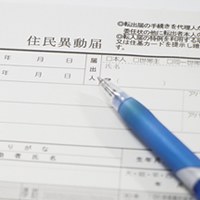
Once you have secured a place to live in Japan, you must bring your residence card (if already issued) and passport to the city or ward office that has jurisdiction over your residence, and complete the resident registration (住民登録) within 14 days. If your passport has a note stating that your residence card will be issued later (在留カード後日交付) , you should still go to the city or ward office with your passport to complete the registration.
Failing to register your address within the required period may result in a fine or other penalties.
The residence card (Zairyu Kado) serves as your official ID while living in Japan. You will need it for various activities such as: opening a bank account, signing up for a SIM card or mobile phone plan, renting an apartment, applying for a job, submitting a credit card application, using government services.
If you move to a different city or ward in the future, you must bring your residence card to the local city or ward office to complete a moving-out notification (転出届) before the move, and then submit a moving-in notification (転入届) at your new location within 14 days after moving.
What to Do After Arriving in Japan: Enroll in Health Insurance
Foreign nationals staying in Japan mid- to long-term are required to enroll in National Health Insurance, just like Japanese citizens. When you complete your residence card registration at the city or ward office, be sure to also visit the Health Insurance and Pension Division (保険年金課) to apply for health insurance at the same time.
By enrolling in National Health Insurance, you’ll only need to pay 30% of your medical expenses when visiting a hospital or clinic in Japan—the remaining 70% is covered by the insurance system. This is essential for managing healthcare costs during your stay. Once your registration is complete, you will receive a National Health Insurance card. Be sure to bring this card whenever you visit a medical facility.
Health insurance premiums vary depending on the municipality and your income level—the higher your income, the higher your monthly premium. However, if you’re an international student with no income in Japan, you may be eligible for a reduction or exemption on your insurance payments. To apply for this discount, check with the staff at your local city or ward office.
What to Do After Arriving in Japan: How to Open a Bank Account as a Foreigner
As opening a bank account in Japan, you need a Residence Card (Zairyu Kado), a health insurance card, a passport, and a personal seal (inkan/hanko). You should also prepare a student card or an employee ID card because it might be required. (* Note: Foreigners staying in Japan for less than 90 days, such as on a tourist visa, cannot open a bank account.)
Even for foreigners with a valid mid- to long-term visa (90 days or more), some banks may decline your application if you’ve been in Japan for less than six months. However, this policy varies between banks—and even between individual branches. So, if you're an international student or working holiday participant and are denied at one bank, don’t hesitate to try another. Banks such as Shinsei Bank and Japan Post Bank (Yucho Ginko) are generally more foreigner-friendly. Applying at a branch near your home, school, or workplace may also improve your chances of successfully opening an account.
Required Documents for Opening a Bank Account in Japan (as a Foreigner)
- Identity document
…It would be Residence Card (Zairyu Kado), Special Permanent Resident Certificate (tokubetsu eijusha shomeisho), a health insurance card, a passport, or a driver's license; you should also prepare a student card or an employee ID card because it might be required. - Certificates that prove your current address
…Residence Card or Special Permanent Resident Certificate with your current address or original (not photocopied) utility bills or payment receipts (e.g., phone, water, gas, electricity) that show your name and address. - Personal Seal (Inkan)
…While some banks accept a signature, others may still require a traditional Japanese seal - Reachable Phone Number
…A phone number where the bank can contact you directly
Recommended Bank for Foreigners in Japan

Although foreigners who have been in Japan for less than six months and are not employed may not be eligible to open an account, SBI Shinsei Bank is one of the most foreigner-friendly banks in Japan compared to others.
To open an account, simply fill out the application form on their official website and submit the required documents either by mail or through their mobile app. Once your application is approved, you’ll receive your cash card, security card, and online banking guide at your registered address—usually within about one week.
Although SBI Shinsei Bank has a limited number of physical branches, you can easily withdraw money from Seven Bank ATMs and convenience store ATMs across Japan. ATM withdrawal fees and balance inquiries are free 24/7. In addition, online transfers to other banks are free once per month, and depending on your account balance and status, up to 10 transfers per month can be free. If you are a foreign resident working in Japan, SBI Shinsei Bank can be a smart and convenient banking option.
Open an Online Banking Account at SBI Shinsei Bank (in Japanese)
What to Do After Arriving in Japan: How to Get a SIM Card or Mobile Phone Plan as a Foreigner
When living in Japan, having a mobile phone plan or SIM card is essential. Japan’s three major mobile carriers are SoftBank, au, and NTT docomo. These companies operate their own networks and offer consistently high-speed connections. However, their plans tend to be more expensive, with limited options, and often come with fixed contract periods. Early termination may result in cancellation fees.
On the other hand, low-cost SIM card providers (MVNOs) offer more flexible contracts and are usually cheaper. Many of them allow you to cancel anytime without penalty, making them a great option for working holiday makers, international students, or anyone staying in Japan for less than one year. Choosing a short-term, commitment-free SIM card can help you stay connected without long-term obligations.
Documents Required to Sign a Mobile Phone or SIM Card Contract in Japan (for Foreigners)
- Proof of Identity
…Residence Card or Special Permanent Resident Certificate (with current address), Valid Passport, Japanese Driver’s License (excluding international licenses) - Bank Card or Passbook
…Needed if you wish to set up direct debit payments from your bank account - Credit Card(Required if you’re not using bank account transfers for payment)
Recommended Japan's SIM Cards

Rakuten Mobile offers one of the most convenient and affordable SIM card plans for foreigners living in Japan. Their "Rakuten Saikyo Plan" (最強プラン) is simple and transparent, making it an ideal choice for both light and heavy data users. The monthly fee is based on how much data you actually use, allowing you to pay only for what you need. If your monthly data usage stays under 3GB, the cost is just ¥1,078. For those who use between 3GB and 20GB, the price rises to ¥2,178. Even if your usage exceeds 20GB, you’ll still pay no more than ¥3,278 per month, as the plan becomes unlimited at that point.
They also offer the Rakuten Saikyo U-NEXT Plan for ¥4,378 per month, which includes wireless internet access and unlimited streaming of movies and anime on U-NEXT.
One of the key benefits of Rakuten Mobile is its point reward system. For every ¥100 you spend on your bill, you earn one Rakuten Point. These points can be used to shop on Rakuten Ichiba, the company’s online marketplace, or applied directly to your Rakuten Mobile bill. This makes it a great option for anyone who wants to save on their monthly phone expenses, especially students and those on a tight budget.
Another major advantage is that Rakuten Mobile does not require a long-term contract. Rakuten Mobile is no cancellation fees, so you can cancel your plan at any time without penalty. This makes the service particularly well-suited for international students, working holiday makers, and anyone staying in Japan short-term. However, if you’ve purchased a phone on an installment plan or subscribed to additional services, you will need to pay off any remaining balance when you cancel.
Rakuten Mobile is also flexible in terms of payment methods. You can choose to pay by credit card or have the monthly fee automatically withdrawn from a Japanese bank account. This is especially helpful for foreigners who may not have a Japanese credit card yet. The service includes 2GB of free international roaming each month, which is perfect for those who may need to travel home temporarily or go abroad for work. Rakuten Mobile also offers a free calling app called Rakuten Link, which allows users to make domestic calls within Japan at no additional charge. This feature is particularly useful for foreigners who frequently make phone calls and want to keep their mobile costs low.
Currently, Rakuten Mobile is running a special promotion. Customers who switch from another Japanese carrier can receive up to ¥14,000 worth of Rakuten Points. New customers signing up for the Rakuten Saikyo Plan can also receive up to ¥13,000 in points. With its competitive pricing, user-friendly policies, and features that are especially helpful for foreigners, Rakuten Mobile stands out as one of the best SIM card options in Japan.
Best SIM Card for Foreigners in Japan Without a Credit Card or Japanese Bank Account

For foreigners staying in Japan without a Japanese credit card or local bank account, finding a convenient SIM card can be a challenge. Fortunately, Mobal, a UK-based telecom company, offers a SIM card service specifically designed for international visitors in Japan.
Mobal uses the Docomo network, which ensures fast and reliable data speeds across the country. One of the biggest advantages of Mobal is its wide range of payment options. In addition to credit card payments, users can also pay with PayPal or Alipay (Zhifubao), making it accessible even for those without Japanese financial accounts.
Another convenient feature is the flexible pickup and delivery system. You can receive your SIM card at major Japanese airports such as Narita, Haneda, Kansai, and Chubu, or even have it shipped for free to Taiwan, Hong Kong, mainland China, Germany, France, the United States, and Canada before your trip. This means you can order your SIM online through the official website and start using it immediately after arriving in Japan.
Mobal offers four different data plans based on your usage needs: 1GB, 5GB, 10GB, 30GB, and 50GB per month. These plans are ideal for a variety of users, whether you only need light internet access or rely heavily on mobile data. There is no long-term contract, and after using the service for just one month, you can cancel at any time without any cancellation fees.
Thanks to its flexibility, multilingual support, and payment accessibility, Mobal is an excellent choice for short-term foreign residents in Japan, such as business travelers, international students, and working holiday makers. If you're looking for a hassle-free SIM card you can use without a Japanese credit card or bank account, Mobal is one of the most foreigner-friendly options available.
What to Do After Arriving in Japan: How to Set Up Internet Service as a Foreigner
When moving to Japan, having reliable internet access is essential for studying, working, and daily life. If you’re living in a dormitory, share house, or monthly rental apartment, internet service is often included and already set up. However, if you move into a regular rental apartment, you will likely need to arrange your own internet connection.
For foreigners staying in Japan for two years or more, such as international students or workers, signing up for a fiber-optic internet plan (Hikari Kaisen) is highly recommended. Fiber internet uses optical fiber cables to deliver high-speed, stable internet directly to your home. Unlike Wi-Fi signals, it’s not affected by electromagnetic interference, making it ideal for watching high-quality videos, downloading and uploading large files, and playing online games with minimal lag.
However, fiber-optic contracts in Japan typically involve long-term agreements, and canceling outside of the contract renewal period may result in early termination fees. So if you choose this option, make sure to understand the contract terms before signing.
On the other hand, portable Wi-Fi or home Wi-Fi plans are a better option for those with uncertain stay durations. Many Wi-Fi services offer no minimum contract period, allowing you to cancel at any time without penalty. Compared to fiber, Wi-Fi plans are more flexible and easier to change, making them a great choice if you’re unsure how long you’ll be in Japan or if you’re planning to return home within a short time.
In short, if you're staying in Japan long-term and want a fast, stable connection, go with fiber. If you need flexibility and easy cancellation, Wi-Fi is the way to go.
Recommended WiFi Service for Foreigners Staying Less Than 2 Years in Japan
If you're a foreigner staying in Japan for less than two years, Shibarinashi WiFi is a great option. With no contract and no cancellation fees, you can cancel anytime—perfect for short-term stays like study abroad or working holidays.
Plans are affordable, starting at ¥2,178/month for 10GB, with options up to 90GB for ¥4,818. You can also top up data if you run out, and there are no speed restrictions. Payments can be made by credit card, convenience store, or bank transfer, making it accessible even if you don’t have a Japanese credit card.
Another key benefit: the same WiFi device works in over 106 countries. Just purchase international data online—no need for a separate SIM or rental WiFi when traveling.
With flexible terms, simple setup, and global usability, Shibarinashi WiFi is an excellent choice for foreigners needing reliable internet during their stay in Japan.
Recommended Fiber Internet Plans for Long-Term Foreign Residents in Japan
If you're planning to stay in Japan for over two years and need fast, stable internet, NURO Hikari is one of the top choices. Provided by So-net, a major Japanese ISP, NURO Hikari has ranked No.1 in customer satisfaction for "speed and stability" three years in a row, according to Oricon's internet service rankings. While most fiber services in Japan offer speeds of up to 100Mbps, NURO Hikari provides download speeds of up to 2Gbps or even 10Gbps, making it ideal for streaming, gaming, and heavy internet usage.
Compared to other fiber internet providers, NURO offers competitive pricing, starting from around ¥5,200 per month. Also, if you sign up for NURO Hikari through the campaign page by April 30, 2026, and your line is activated, you can receive cashback of up to ¥90,000 for a detached house, paid in two installments in the 11th and 17th months after activation. For apartments and condominiums, cashback is available up to ¥60,000. The main limitation is its service area, which currently includes the Kanto region (Tokyo, Kanagawa, Chiba, Saitama, Gunma, Tochigi, Ibaraki), the Tokai area (Aichi, Shizuoka, Gifu, Mie), the Kansai area (Osaka, Kyoto, Hyogo, Shiga, Nara), as well as Hokkaido, Fukuoka, and Saga. If you're living in one of these regions, NURO Hikari is a strong candidate for high-speed, reliable internet during your stay in Japan.
What to Do After Arriving in Japan: How to Set Up Electricity, Gas, and Water Services as a Foreigner
When moving into a rental apartment in Japan, essential utilities such as electricity, gas, and water are not automatically activated. You must complete a contract and activation process for each service before you can use them. These procedures can usually be done via phone or online. Before applying, make sure to have key information ready, including the contract holder’s full name (matching the name on your residence card), address, start date of usage, and a phone number.
| application process | presence of the contract holder | |
|---|---|---|
| Electricity | In Japan, the electricity market is deregulated, meaning you can choose your own power company. There are many providers and pricing plans, so it's a good idea to compare options and select one that fits your lifestyle and budget. No in-person appointment is required to start electricity service—you can activate it remotely. | × |
| Gas | To set up gas service, check with the Japan Gas Association or your real estate agent to find the appropriate gas company in your area. Gas activation requires a technician visit, and the contract holder must be present during the appointment. Make sure to schedule this in advance for a time that is convenient. | 〇 |
| Water | You can apply for water service through the website of your local water bureau. Alternatively, you can fill out the water service start application form, which is often placed in your mailbox or near your front door, and send it by mail. | × |
Recommended Electricity Provider for Single Foreign Residents in Japan

For foreigners living alone in Japan, HTB Energy’s “Tanoshii Denki” is an excellent choice. Established by the travel agency H.I.S. and Huis Ten Bosch Co., Ltd., HTB Energy offers electricity plans that are 5% cheaper than those of traditional power companies, regardless of your contract amperage or electricity usage. Currently, new customers can enjoy three months of free basic electricity charges, making it a cost-effective option for those starting a new life in Japan. In the Tokyo, Chubu, and Kansai areas, a combined electricity and gas plan is also available, offering annual savings of ¥1,224. Service is available nationwide, so it's a solid option for foreigners living anywhere in Japan.
One especially helpful feature is the free “Anshin Support 365 Plus” service, included with the basic plan. It provides 24/7 assistance for common issues such as problems with electricity, plumbing, keys, or computers. This added security makes HTB Energy particularly suitable for foreigners living alone, offering both affordable rates and peace of mind in daily life.